
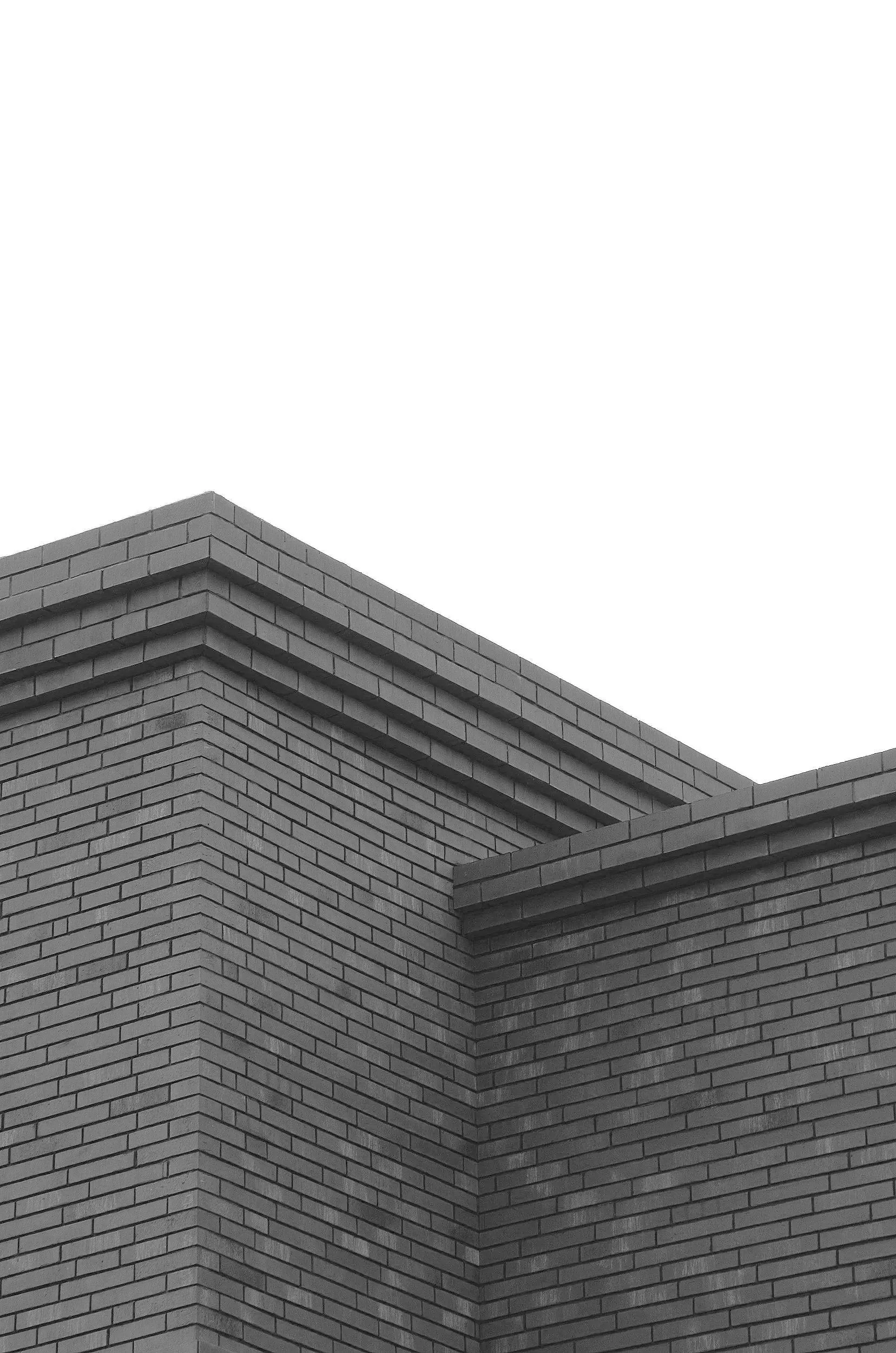
Parapet Inspections
Parapet Inspections
Annual parapet observation and condition documentation for New York City buildings under Local Law 126. Post & Lintel supports building owners, co-op and condo boards, and property managers through inspection coordination, reporting, unsafe condition response, and repair documentation across all five boroughs.
As of January 1, 2024, annual parapet inspections are required for virtually every New York City building with a parapet facing a public right-of-way — regardless of height.
Local Law 126 of 2021 added Section 28-301.1.1 to the NYC Administrative Code, establishing a mandatory annual parapet observation requirement. The inspection window runs from January 1 through December 31 of each year. Unlike FISP façade inspections, parapet reports are not filed with the DOB — they must be prepared, retained by the building owner for a minimum of six years, and made available upon DOB request.
Parapets are among the most exposed elements of any building's exterior — subject to weathering on two sides simultaneously — and among the most common sources of façade deterioration. The law reflects the DOB's broader effort to address falling debris incidents before they occur, extending inspection obligations to buildings of all heights, not only those subject to FISP.
Who Is Subject to Local Law 126 Parapet Requirements
The requirement applies to all NYC buildings with a parapet wall fronting a public street, sidewalk, alley, or any public right-of-way — regardless of building height or occupancy type. The law covers residential, commercial, mixed-use, and institutional buildings alike. It is the building owner's responsibility to determine applicability.
Exemptions are limited to: fully detached one- and two-family homes; and buildings where a continuous fence or barrier prevents public access to the exterior wall, provided that barrier is at least half the height of the parapet. If a building does not clearly meet an exemption, compliance is required.
What the Law Requires
Local Law 126 of 2021 is most widely known for establishing periodic parking structure inspection requirements, but it also added the annual parapet observation mandate through Section 28-301.1.1 of the Administrative Code. The detailed inspection and reporting requirements are contained in Title 1 Section 103-15 of the Rules of the City of New York.
The Annual Inspection Window
Building owners must have the parapet observation completed between January 1 and December 31 of each calendar year. The first mandatory inspection year was 2024. Each subsequent year carries the same annual deadline. There is no grace period — the obligation resets each January 1.
No DOB Filing Required — But Records Must Be Kept
Unlike FISP façade reports, parapet observation reports do not need to be filed electronically with the DOB through DOB NOW or any other portal. However, building owners must retain the report on-site and make it available upon DOB request. Reports must be kept for a minimum of six years. If the DOB requests a report and the owner cannot produce one, violations and fines may follow.
Relationship to FISP (Local Law 11)
Parapet inspections under Local Law 126 are separate from and in addition to the five-year FISP façade inspections required under Local Law 11 for buildings over six stories. For buildings subject to both — which includes most taller residential and commercial buildings in New York City — both obligations must be satisfied independently each cycle. However, if a building subject to FISP files an Unsafe Notification (FISP3) in DOB NOW Safety, that filing may satisfy the DOB notification requirement for an Unsafe parapet condition identified in the same inspection, provided the FISP report contains all information required by rule 1 RCNY 103-15.
Local Law 126 — Annual Parapet Inspection
Applies to all buildings with parapets facing public right-of-way, regardless of height. Annual frequency. Report retained by owner, not filed with DOB. Inspector may be a licensed professional or a qualified competent person.
Local Law 11 — FISP Façade Inspection
Applies only to buildings greater than six stories. Five-year cycle with sub-cycle filing windows. Report filed electronically through DOB NOW: Safety. Inspector must be a DOB-registered Qualified Exterior Wall Inspector (QEWI).
Who Can Perform a Parapet Inspection
Local Law 126 sets a more flexible inspector qualification standard than FISP. Unlike the FISP program — which requires a DOB-registered Qualified Exterior Wall Inspector (QEWI) — the annual parapet observation may be performed by any person deemed competent to identify parapet hazards.
Qualified Individuals Under the Law
The NYC Administrative Code identifies the following as examples of individuals qualified to perform parapet observations: licensed architects and engineers, bricklayers, masons, building superintendents, handymen with relevant experience, inspectors employed by New York State-authorized insurance companies, and New York State-authorized building inspectors. The standard is competence to identify potential hazards — not licensure per se.
Why Licensed Professionals Are Commonly Engaged
While the law permits non-licensed inspectors, most property owners, management companies, and industry organizations recommend engaging a licensed architect or engineer for the annual parapet observation. The reason is liability: if a building superintendent or unlicensed handyman performs the inspection and misses a hazardous condition that later results in an injury, the individual and potentially the building owner face significant legal exposure. A licensed professional carries professional liability insurance, applies recognized technical standards to their assessment, and produces documentation that is more defensible in the event of a dispute or DOB inquiry.
For larger buildings or those with complex parapet configurations — multiple roof levels, setbacks, or extensive coping conditions — the technical demands of the inspection also favor a licensed professional with structural assessment experience.
What the Parapet Observation Covers
The parapet observation must be conducted from a position that allows close-up physical or detailed visual assessment of the parapet and all appurtenances. Acceptable inspection methods include observation from the roof, fire escape, balcony, scaffolding, or boom lift. Ground-level observation alone does not satisfy the requirement. A plumb check is required — the parapet must be verified to be vertically aligned within one-eighth of its cross-sectional thickness at any point.
Elements Covered in the Inspection
- Parapet wall structural condition
- Plumb and vertical alignment check
- Cracks — horizontal, diagonal, and through-wall
- Displaced or missing masonry units
- Spalling and surface deterioration
- Mortar joint condition and decay
- Coping stones and coping cap condition
- Flashing and counterflashing condition
- Waterproofing and sealant integrity
- Cornices attached to the parapet wall
- Guard railings and attachments
- Roof access rails and gooseneck ladders
- Telecommunications equipment and antennas
- Signage and mounted fixtures
- Fire escape handrail attachments
- General stability and displacement assessment
What the Report Must Include
The DOB does not prescribe a specific report format, but minimum required content is established by rule. The parapet observation report must include: the building address and owner contact information; the name and contact information of the person performing the inspection; a detailed layout indicating the location of all parapets inspected; a description of parapet construction noting materials, height, and thickness; all observed conditions including any unsafe conditions and steps taken to address them; a record of any repairs or maintenance performed since the last report; and dated photographs documenting observed conditions.
Safe, SWARMP, and Unsafe
Parapet conditions are classified using the same three-category system used in FISP façade inspections. Each classification carries distinct follow-up obligations for the building owner.
Safe
The parapet and all appurtenances are in sound condition with no defects or hazards observed. No immediate repair or maintenance is required. The annual observation report is prepared and retained. No DOB notification is required.
SWARMP
Safe With a Repair and Maintenance Program. Conditions are present that are not immediately hazardous but require attention before they deteriorate further. The report documents the conditions and recommended repair timeline. SWARMP conditions should be addressed before the next annual inspection to avoid potential reclassification.
Unsafe
The parapet has conditions posing an immediate hazard to public safety. The inspector must immediately notify the DOB by calling 311 and emailing parapets@buildings.nyc.gov. The building owner must install public safety protections — sidewalk shed, netting, or barriers — and complete repairs within 90 days of DOB notification. For FISP buildings, an Unsafe Notification (FISP3) must also be filed in DOB NOW: Safety.
Annual Compliance Steps
The following reflects the standard sequence for meeting Local Law 126 parapet inspection requirements each calendar year.
Common Parapet Conditions in NYC Buildings
Parapets are among the most vulnerable building components in New York City's climate — exposed to freeze-thaw cycling, wind-driven rain, and UV degradation on two faces simultaneously. The following conditions are commonly identified during annual parapet observations, particularly in older masonry buildings.
Masonry Deterioration
Brick spalling, cracked units, displaced masonry, and failed mortar joints are among the most frequently cited parapet conditions in New York City. Mortar deterioration is particularly common in parapets built before the 1960s, where original lime mortars have weathered significantly. Once mortar fails, water infiltration accelerates brick deterioration and can undermine the structural integrity of the parapet wall. Repointing — the systematic replacement of deteriorated mortar joints — is the most common parapet repair.
Coping and Waterproofing Failure
Coping stones cap the top of the parapet wall and are the primary defense against water infiltration into the masonry below. Cracked, displaced, or improperly flashed coping allows water to saturate the parapet, accelerating deterioration and increasing freeze-thaw damage. Flashing failures at the base of the parapet — where it meets the roof membrane — are similarly common and can cause water to migrate into the building's upper floors and roof structure.
Out-of-Plumb Conditions
Parapets that have shifted out of vertical alignment — more than one-eighth of their cross-sectional thickness at any point — are considered potentially unstable and flagged for further assessment. Out-of-plumb conditions may indicate foundation movement, differential settlement, or progressive structural failure within the parapet itself. These conditions require evaluation by a licensed engineer to determine the appropriate remediation.
Appurtenance Failures
Railings, antennas, telecommunications equipment, signage, and other fixtures attached to parapet walls are covered under the annual inspection. Loose or corroding attachment points, failed anchors, and deteriorated mounting hardware are commonly identified — particularly for older equipment that may not have been inspected since installation.
Violations and Penalties
Failure to conduct the annual parapet inspection or failure to produce a parapet observation report upon DOB request can result in violations and fines ranging from $1,250 to $10,000 per building. Failing to address an Unsafe condition — including failure to install required public protection measures or complete repairs within 90 days — can result in additional violations, emergency repair orders issued by the city at the owner's expense, and civil liability exposure in the event of injury.
Unsafe Condition Reporting Obligations
When an Unsafe parapet condition is identified, the reporting obligation falls on the person performing the observation — not solely on the building owner. The inspector must notify the DOB immediately by calling 311 and emailing parapets@buildings.nyc.gov. The building owner must install protective measures promptly and complete repairs within 90 days. Failure to notify the DOB of a known Unsafe condition compounds the building owner's legal and regulatory exposure significantly.
Post & Lintel Parapet Inspection Services
Post & Lintel supports building owners and property managers across all phases of Local Law 126 parapet inspection compliance. Field observations and documentation may be performed by trained personnel; regulated evaluations, classifications, and DOB notifications are handled by licensed professionals.
- Annual parapet observation coordination
- Inspector engagement and scheduling
- Roof and access coordination
- Close-range parapet condition assessment
- Plumb and alignment verification
- Crack and displacement documentation
- Coping and waterproofing observation
- Appurtenance condition review
- Dated photographic documentation
- Parapet observation report preparation
- Six-year record retention coordination
- Unsafe condition DOB notification support
- Sidewalk shed and protection permitting
- Repair scope and contractor coordination
- Masonry and repointing coordination
- FISP3 Unsafe Notification coordination
- Multi-building portfolio scheduling
- Prior-year report gap review
Who We Work With
Post & Lintel has supported parapet inspection coordination for a range of building types and ownership structures across New York City's five boroughs.
Frequently Asked Questions
Does my building need a parapet inspection if it's already subject to FISP?
Yes. The annual parapet observation under Local Law 126 is separate from and in addition to FISP. Buildings subject to FISP must satisfy both requirements. FISP inspections occur every five years within the assigned sub-cycle; parapet inspections are required annually regardless of where a building sits in the FISP cycle.
Do I need to file the parapet report with the DOB?
No. Unlike FISP reports, parapet observation reports are not filed electronically with the DOB. They must be prepared, retained by the building owner for at least six years, and made available upon DOB request. The only DOB notification required is in the event of an Unsafe condition, which must be reported immediately via 311 and parapets@buildings.nyc.gov.
Can my building superintendent perform the annual inspection?
The law permits any competent person to perform the observation, and building superintendents are listed as an example. However, most industry professionals recommend engaging a licensed architect or engineer, particularly for buildings with complex parapet conditions. A licensed professional carries liability insurance and applies recognized technical standards — reducing the building's exposure if a condition is later found to have been missed.
What happens if an Unsafe condition is found?
The inspector must notify the DOB immediately by calling 311 and emailing parapets@buildings.nyc.gov. The building owner must install public protection measures — sidewalk shed, netting, or barriers — promptly, and complete all repairs within 90 days of DOB notification. For buildings also subject to FISP, a FISP3 Unsafe Notification must be filed in DOB NOW: Safety.
Does my building need scaffolding for the parapet inspection?
Not necessarily. The inspection may be performed from the roof, fire escape, balcony, or other location that provides an unobstructed close-up view of the parapet. For taller buildings or those where roof or fire escape access does not reach all parapet sections, scaffolding or a boom lift may be required. Scaffolding installation requires its own DOB permit.
How much does a parapet inspection cost?
Costs vary based on building size, parapet complexity, number of roof levels, and access requirements. For smaller buildings, costs may be a few thousand dollars; for larger buildings with complex parapet configurations, costs may be higher. Post & Lintel scopes each engagement individually based on the specific building.
What is the deadline each year?
The parapet observation must be completed and the report prepared by December 31 of each calendar year. The inspection window opens January 1. There is no grace period — missing the December 31 deadline creates a compliance gap that may result in violations if the DOB requests a report for that year.
Are cornices covered under the parapet inspection?
Cornices that are physically attached to a parapet wall are included in the annual parapet observation. Standalone cornices without a parapet behind them are generally exempt from the parapet inspection requirement, though they may still be subject to FISP review for buildings over six stories.
Questions about your building's parapet compliance? Reach out to discuss your inspection needs, schedule, or prior-year records.
Contact Us