
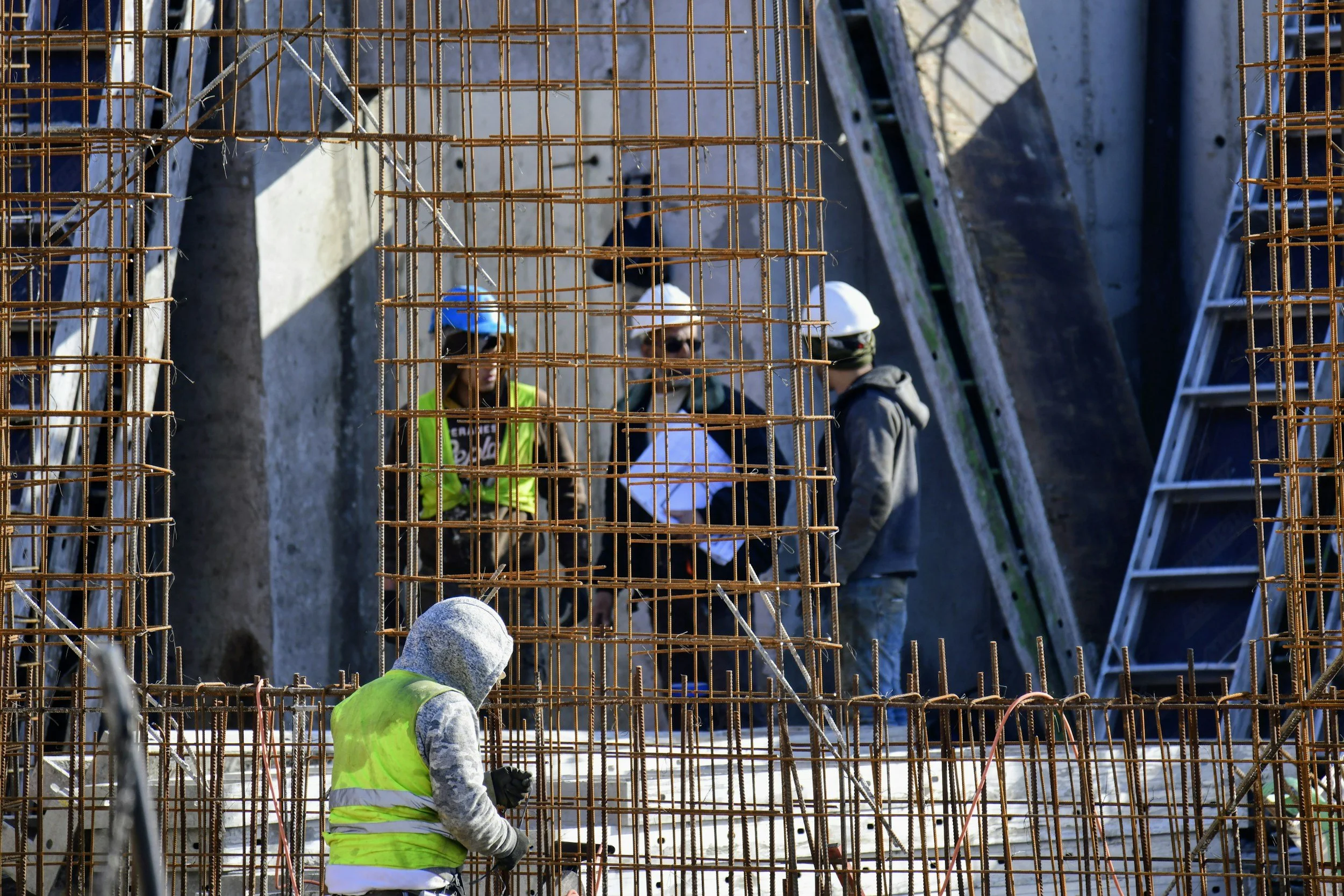
Construction Management
Construction Management
Coordination of permits, inspections, contractor activity, and agency filings across all phases of a New York City construction project. Post & Lintel supports building owners, developers, and boards from pre-construction planning through final sign-off and close-out.
Construction in New York City is regulated by multiple agencies, governed by detailed code requirements, and subject to inspection at every stage.
Construction management services involve coordinating all phases of a construction project in accordance with NYC regulatory requirements. This encompasses pre-construction planning, permit tracking, contractor and subcontractor coordination, inspection scheduling, agency communication, and final sign-off and close-out documentation.
In New York City, the complexity of construction regulation — spanning the NYC Building Code, Zoning Resolution, FDNY requirements, DOT permits, and agency-specific filing systems — makes structured coordination essential for projects of nearly any scale. A missed inspection, an unresolved objection, or an improperly sequenced permit can result in Stop Work Orders, violations, and project delays that are difficult and costly to unwind.
When Construction Management Is Applicable
Construction management support is applicable across a range of project types. It is particularly relevant for projects involving multiple trades or subcontractors working under separate permits, occupied buildings requiring Tenant Protection Plan compliance, phased work requiring sequential permit approvals, and jobs subject to DOB inspections across multiple disciplines. It is also commonly engaged for FISP repair projects, large-scale renovations, gut renovations, and new building construction where regulatory coordination demands dedicated oversight.
What Makes NYC Construction Distinct
New York City construction is regulated under one of the most complex urban building codes in the country. The NYC Building Code (Title 28 of the Administrative Code), Zoning Resolution, Multiple Dwelling Law, FDNY fire code, and agency-specific rules each impose requirements that must be tracked, coordinated, and satisfied before a project can be lawfully completed. No other construction environment in the country involves the same density of overlapping regulatory obligations.
DOB NOW: The Filing and Inspection Portal
Most permit applications, inspection requests, and project filings in New York City are processed through DOB NOW — the Department of Buildings' online portal. DOB NOW handles new building filings, alteration applications, permit issuance, inspection scheduling, and sign-off requests. Since May 2024, all requests for construction sign-off prior to occupancy must be made through DOB NOW: Inspections; prior email-based requests are no longer accepted. Familiarity with DOB NOW workflows — and the ability to monitor and respond to open objections in real time — is a core component of effective construction management in New York.
Permit Types and Sequencing
NYC construction projects typically require multiple permits issued across different DOB categories. The primary building permit (NB, ALT-CO, ALT-1, ALT-2, or ALT-3 depending on scope) runs concurrently with separate trade permits for electrical (EL), plumbing and gas (PL), elevator (EV), sprinkler and standpipe (SP/SD), and fire alarm (FA) systems. Each trade permit must be filed by the respective licensed master tradesperson and has its own inspection sequence and sign-off requirements before the overall job can be closed in DOB NOW. Construction managers track this sequencing to prevent trade permit delays from holding up final project close-out.
Site Safety Requirements
NYC's site safety regulations are among the most detailed in the country. As of December 2024, the definition of a "major building" under the NYC Building Code changed from 10 stories to seven stories (or 75 feet), incorporating thousands of additional projects into the site safety plan and site safety coordinator requirements. Construction superintendents are limited in the number of permits they can be designated on simultaneously — a reduction that has tightened superintendent availability industry-wide. Tenant Protection Plans are required for any construction in or on a residential building where one or more residents remain in occupancy during work, and must be inspected weekly by a special inspection agency retained by the building owner.
NYC Agencies a Construction Manager Interacts With
Effective construction management in New York City requires ongoing coordination with multiple city agencies, each with its own filing systems, inspection processes, and enforcement authority.
DOB — Department of Buildings
Primary permitting authority. Handles plan approvals, permit issuance, inspections, sign-offs, violation enforcement, Stop Work Orders, and Certificate of Occupancy or Letter of Completion issuance. All major filings go through DOB NOW.
FDNY — Fire Department
Reviews and approves fire protection systems including standpipes, sprinklers, and fire alarms. Conducts testing and inspections for occupancy-related approvals. Involved in any work affecting life safety systems.
DOT — Department of Transportation
Issues permits for street closures, lane restrictions, construction fencing, sidewalk sheds, scaffolding within the right-of-way, and curb cuts. DOT permits are often required in parallel with DOB permits for façade and exterior work.
HPD — Housing Preservation & Development
Oversees Tenant Protection Plan (TPP) requirements for construction in occupied residential buildings. Coordinates with the DOB on residential code compliance, habitability standards, and violation enforcement in dwelling units.
DEP — Environmental Protection
Regulates noise control, asbestos abatement notifications, utility connections, and environmental compliance on construction sites. DEP permits may be required for excavation, dewatering, and air quality management.
OATH — Office of Administrative Trials & Hearings
Handles hearings for Environmental Control Board (ECB) violations. Construction managers coordinate violation response documentation, appearance scheduling, and Stop Work Order rescission processes through OATH when violations are issued.
NYC Building Permit Categories
Understanding which permit type applies to a given project is a foundational step in construction planning. The permit category determines the review path, filing requirements, inspection sequence, and close-out process.
New Building (NB)
Required for the construction of a new structure. NB filings involve full plan review, zoning compliance documentation, and a new Certificate of Occupancy upon completion. These are among the most complex and time-consuming filings in the DOB system, often requiring 6–18 months from application to permit issuance depending on project complexity and review path.
Alteration — Type 1 (ALT-1 / ALT-CO)
Required when work results in a change of use, occupancy group, or egress configuration, or when a new or amended Certificate of Occupancy is required. ALT-1 filings involve full plan review and a new or amended CO upon completion. Typical review timelines range from 8–16 weeks under standard plan examination, with faster processing available under Professional Certification.
Alteration — Type 2 (ALT-2)
Used for significant alterations that do not require a new CO — including structural work, MEP modifications, and interior renovations that change layout or occupancy within an existing classification. ALT-2 filings require signed and sealed drawings and DOB inspection at various project stages. Standard review timelines are approximately 4–8 weeks.
Alteration — Type 3 (ALT-3)
Used for minor alterations involving a single trade and not affecting egress, occupancy, or structure. ALT-3 filings are typically self-certified and have shorter review timelines of approximately 2–4 weeks. Examples include like-for-like equipment replacements, minor electrical work, and limited plumbing modifications.
Demolition (DM)
Required for full or partial demolition of a building. Demolition permits require site safety plans, asbestos survey documentation, utility disconnection approvals, and coordination with DEP and the utility providers before work can begin.
Special Inspections and Progresss Inspections
Chapter 17 of the NYC Building Code requires Special Inspections for specific categories of work — including structural steel, concrete, masonry, foundation systems, and certain mechanical installations. A Special Inspection Agency (SIA), registered with the DOB and retained by the building owner, is responsible for these inspections. Critically, the contractor cannot hire the special inspector. Construction managers coordinate the SIA engagement, inspection scheduling, and reporting flow to keep projects on schedule and avoid inspection-related delays at sign-off.
Construction Management from Start to Close-Out
A well-managed construction project in New York City follows a structured sequence from initial planning through final DOB sign-off. The steps below reflect the typical path for a permitted alteration project in an occupied building.
Stop Work Orders, Violations, and ECB Penalties
NYC construction projects are subject to enforcement action by the DOB at any stage. Understanding the violation and enforcement structure — and how to respond effectively — is a critical component of construction management in New York City.
Stop Work Orders
The DOB may issue a Stop Work Order (SWO) when construction is found to be proceeding without a valid permit, in violation of approved drawings, in an unsafe manner, or in contravention of a previous DOB directive. All work must cease immediately upon issuance of an SWO. Rescinding a Stop Work Order requires correcting the underlying condition, submitting required documentation to the DOB, and in some cases appearing before OATH. Construction managers coordinate the SWO response process to minimize project downtime.
ECB Violations and Penalties
Environmental Control Board (ECB) violations are issued for a range of construction non-compliance matters, including work without a permit, failure to maintain site safety, improper waste handling, and inspection failures. Class 1 violations for work without a permit carry civil penalties of $2,500–$25,000, plus double the standard permit fee for legalization. ECB violations remain on a building's DOB record and can complicate future permit applications, financing, and property transactions if left unresolved.
Permitted Work Without a Superintendent
As of 2026, construction superintendents in New York City may only be designated on one permit at a time if that permit is for a major building. The tightened superintendent availability this creates means that projects must plan superintendent designations carefully and well in advance. Failure to have a licensed superintendent designated on a required project can result in permit suspension or Stop Work Order issuance.
Post & Lintel Construction Management Services
Post & Lintel supports building owners, boards, and developers across the full range of construction management coordination activities for projects in New York City.
- Pre-construction planning and phasing
- Permit tracking and status monitoring
- DOB NOW filing coordination
- Trade permit sequencing
- Tenant Protection Plan coordination
- Contractor and subcontractor coordination
- Agency coordination (DOB, FDNY, DOT, DEP, HPD)
- DOB inspection scheduling and tracking
- Special Inspection Agency coordination
- Objection response coordination
- Stop Work Order response support
- ECB violation coordination
- Change order and scope review
- Material logistics and site protection
- Construction progress reporting
- Sidewalk shed and scaffolding permitting
- Punch list coordination
- Final inspection preparation
- As-built drawing coordination
- Certificate of Occupancy close-out
- Letter of Completion coordination
- FISP repair project coordination
Buildings and Projects We've Supported
Post & Lintel has supported construction management coordination across a range of building types, project scales, and ownership structures throughout New York City.
Frequently Asked Questions
What is the difference between a construction manager and a general contractor?
A general contractor is responsible for physically building the work. A construction manager coordinates the regulatory, administrative, and logistical aspects of a project — permits, inspections, agency filings, and contractor oversight — often on behalf of the building owner. The roles may overlap on some projects and be held by different parties on others.
Do I need a Tenant Protection Plan?
A Tenant Protection Plan is required for any construction in or on a residential building where one or more residents remain in occupancy during the work. It must be filed with the DOB before construction begins and must be inspected weekly by a special inspection agency retained by the building owner — not the contractor.
What is a Letter of Completion vs. a Certificate of Occupancy?
A Letter of Completion (LOC) is issued when permitted work is completed in an existing occupied building that does not require a new or amended Certificate of Occupancy. A Certificate of Occupancy (CO) is required for new buildings, changes of use or occupancy, and significant alterations that alter the building's legal status. Both are issued through DOB NOW upon final sign-off.
How long does it take to get a DOB permit in NYC?
Timelines vary significantly by permit type and review path. ALT-3 filings may take 2–4 weeks; ALT-2 filings 4–8 weeks; ALT-1 filings 8–16 weeks; and new building applications 6–18 months. Professional Certification can reduce timelines by 50–75% for eligible projects, but places self-certification responsibility on the architect or engineer of record.
What triggers a Stop Work Order?
A Stop Work Order may be issued when work is proceeding without a valid permit, deviating from approved drawings, creating an unsafe condition, or violating a prior DOB directive. All work must cease immediately. Rescinding a SWO requires correcting the underlying condition and submitting required documentation to the DOB, and may involve an OATH appearance.
Who is responsible for scheduling DOB inspections?
The contractor is responsible for scheduling and completing required DOB inspections through DOB NOW: Inspections. Before scheduling, the contractor must confirm that all work matches approved drawings, that no safety hazards exist, and that special inspections are completed and on file. Construction managers track these milestones and coordinate scheduling to prevent delays.
Can work begin before a permit is issued?
With limited exceptions (emergency conditions, certain demolition work), construction work requiring a permit may not begin before the permit is issued. Proceeding without a permit constitutes Work Without a Permit — one of the most common DOB violations in New York City — and carries civil penalties of $2,500–$25,000 plus double the standard permit fee for legalization.
What happens if construction finishes but permits are never closed?
Open permits on a building's DOB record can complicate refinancing, sale, and future permit applications. Lenders and title companies frequently flag open permits as an issue requiring resolution before closing. Closing permits requires scheduling final inspections, resolving any outstanding objections, submitting final reports, and receiving a CO or LOC through DOB NOW.
Construction comes with moving parts. Reach out to discuss permit status, coordination needs, or project planning.
Contact Us